
 2 hours ago

 Getty Images
The Royal College of Psychiatrists gathered information from NI's five health trusts
More than a quarter of consultant psychiatry posts in Northern Ireland are "effectively empty", according to the Royal College of Psychiatrists.
This comes from data gathered in a census, with information collated from all five health trusts in 2025.
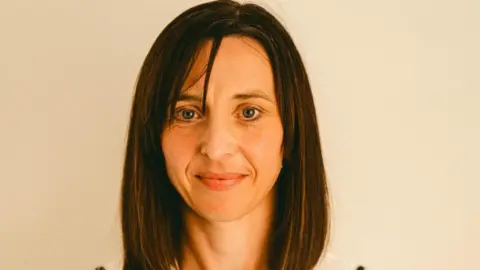
Northern Ireland chair, Dr Julie Anderson, said: "Behind these numbers are people - some of them vulnerable - who are waiting far too long for the support they so desperately need."
The Department of Health said it was acutely aware of the challenges faced by the psychiatry workforce in responding to increasing demand and growing complexity in the face of high vacancy rates.
The survey found that 29% of consultant posts were either vacant or being covered by locum doctors - up from 25% in 2023.
The data also raised concerns in terms of specialty and specialist (SAS) psychiatrists, experienced senior doctors who work alongside consultants.
In March 2025, there were 79 SAS psychiatrist posts across Northern Ireland but only 52 were filled by permanent doctors.
The remaining posts were either vacant or filled by temporary staff.
 HANDOUT
Dr Julie Anderson, said: "Behind these numbers are people - some of them vulnerable - who are waiting far too long for the support they so desperately need"
Anderson said the figures showed how it was "increasingly difficult" for mental health services to "provide consistent, high-quality care".
"Mental illness often starts earlier in life than many physical health conditions, and without effective treatment it can become chronic and increase the risk of later physical illness," she said.
"However, early intervention improves outcomes for individuals and can reduce future pressure on health services."
Anderson said mental health services had "historically faced years of chronic underfunding and despite having a greater mental health need, we continue to receive less funding than other parts of the UK".
"At the same time, we still don't have comprehensive regional data on mental health waiting lists, meaning the true scale of unmet need remains very unclear," she added.
"It's clear things need to change – everyone should be working together to secure solutions to this continuing workforce crisis."
Anderson described how despite people being "very very interested in becoming psychiatrists", there has been no increase in the number of training places "in almost 20 years".
She said that demand was increasing and training posts that were available were "oversubscribed".
Anderson said work to resolve the issue needed to start now and a better job needed to be done at looking after the workforce.
She called for a cross departmental approach across the political parties and across the departments in Stormont saying that "this isn't just about mental health, it's not just about Mike Nesbitt making changes".
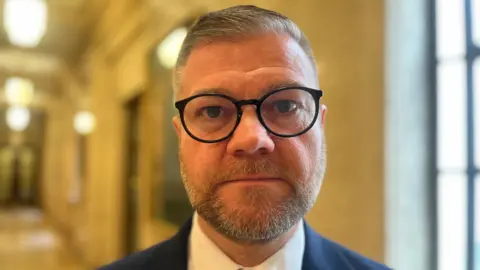
SDLP MLA Colin McGrath sits on the Stormont health committee
SDLP MLA Colin McGrath, who is on the Stormont health committee, said there were "cross connections" between different parts of the health service so by properly solving one issue, you could help with other issues.
He explained that if vulnerable people in the community were suffering from mental health issues, they would likely be using GPs, emergency departments and requiring more medicines to manage their health which all costs money.
"If the problem is budget, we're spending it but we are just spending it in the wrong place," he said.
"We do need to see a gear change very quickly," he said.
The Department of Health said officials worked closely with the Royal College on a range of workstreams which aimed to address these challenges.
It said: "The Mental Health Strategy remains the key vehicle for driving systemic reform in NI.
"The minister has been clear that delivering the strategy requires sustained and additional investment and he will continue to make the case for mental health until the ambition so clearly set out in 2021 is fully realised."