
 2 hours ago
Emergency doctors say hospital bed shortages, an aging population, and gaps in primary care are driving delays.
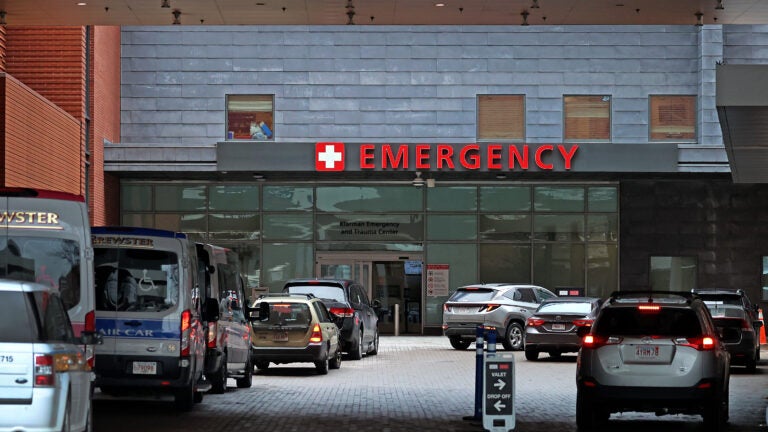 Emergency hospital entrance at Boston Medical Center. (David L Ryan/Globe Staff)
By Annie Jonas
March 16, 2026 | 2:15 PM
4 minutes to read
During his residency at UMass Chan Medical School, Kevan Mamdouhi dreamed of an emergency department with a newly built tower that included seemingly endless inpatient beds, patients flowing from the ER to hospital rooms upstairs, and a waiting room that finally cleared.
“It was such a wonderful dream,” he recalled.
Then he woke up. Reality was far messier: hours-long emergency room wait times, bed shortages, and a healthcare system under immense strain.
For Massachusetts emergency physicians, that dream captures a simple truth: long ER waits rarely steam from care inside the department. Instead, doctors say they’re the result of bottlenecks across a system stretched thin by staffing shortages, aging patients, limited hospital beds, and gaps in primary care.
Massachusetts ranks near the top nationally for ER delays. Patients spend an average of 189 minutes — more than three hours — in the emergency department before leaving, according to World Population Review. Only Maryland and Delaware report longer average stays.
Boston.com asked readers for their experiences, and many shared they waited eight, 10, 12 hours — or longer — to be seen.
Emergency physicians hear those frustrations every day — and share them.
“We physicians and the nurses want the system fixed — maybe even more than the patients,” said Steven Bird, an emergency medicine doctor at UMass Memorial University campus in Worcester. “Because we experience it every single day that we go to work.”
When the ER works — and when it doesn’t
Emergency departments are designed to move quickly when space and staffing are available.
When it’s not busy, “you’re in and out, and you get what you need,” said emergency medicine physician Tanya Girgenrath. “When all the resources and space are available … it actually operates very smoothly.”
But those conditions are becoming rare.
The ER process typically begins with registration and triage, when a nurse evaluates symptoms and determines how urgently someone needs care. Patients then wait for an exam room or bed — and increasingly, doctors say, those spaces simply aren’t available.
The problem doctors call ‘public enemy number one’
The biggest driver of ER delays has a name inside hospitals: boarding.
“Boarding in the emergency department is public enemy number one,” Girgenrath said.
Boarding happens when patients who need to be admitted to the hospital remain in the emergency room because no inpatient beds are available. Boarding can last not just for hours, but for days, weeks, or longer, doctors say. The problem worsened after the COVID-19 pandemic, which strained staffing and hospital capacity nationwide.
Part of the pressure comes from an aging population with more complex health needs.
“We’re really experiencing the aging of the baby boomer population,” Girgenrath said. “That elderly population … means that we just have more sicker patients than we did before.”
But hospital beds are also tied up by patients who are ready to leave but cannot be discharged because rehabilitation centers, long-term care facilities, or psychiatric units lack space.
“There are patients … that have been in the hospital for a year or two or three, living there because there’s no place for them to go,” Bird said.
When those beds remain occupied, the ripple effects reach the ER.
“When we can’t get patients out of the hospital to short-term care, long-term care, home psychiatric facilities, then they languish in the ER,” Bird said.
The ER as the system’s safety net
Emergency rooms also serve as a stopgap for broader gaps in the health care system, doctors say.
“ERs are being used as the band-aid for a problem we do not have the resources or ability to fix,” Girgenrath said.
Doctors say ER patients generally fall into three groups: those with true emergencies, those who need care but cannot access it elsewhere as they may lack a primary care doctor or insurance, and those seeking faster treatment than they could get through their primary.
The nationwide shortage of primary care physicians contributes to that dynamic. The National Center for Health Workforce Analysis projects a shortage of 141,000 physicians by 2038, including more than 70,000 in primary care.
“Getting an appointment is difficult,” Bird said. “That contributes… to the number of patients coming to the ER because they don’t have a primary care physician.”
Recent hospital closures, such as Carney Hospital in Dorchester and several Steward hospitals across the state, forcing remaining hospitals to absorb more patients.
“It falls on the remaining hospitals to use the resources they have to take care of a larger population,” Mamdouhi said.
Federal law also requires emergency departments to treat anyone who arrives, regardless of their insurance status.
“Legally we cannot turn away people who come to the ER,” Bird said.
Burnout behind the scenes
The strain is taking a toll on emergency staff. Emergency medicine has one of the highest burnout rates among medical specialties, Girgenrath said, and that pressure can affect flow.
“When you’re burned out, you’re going to be less efficient,” Girgenrath said.
For physicians working inside crowded emergency departments, every shift involves trade-offs.
“One of the hardest things I have to navigate is doing the best possible thing for the person who is in front of me right now,” Girgenrath said. “If I do absolutely everything for one person, that’s 30 people in the waiting room who haven’t seen a doctor at all.”
Doctors say they know the wait is stressful often apologize repeatedly during shifts.
“I apologize for the wait. I apologize we don’t have a room for you. I apologize you’re in the cold hallway,” Bird said.
Solutions beyond the ER
Doctors say solving the problem would require changes beyond the emergency department — including expanding hospital capacity and strengthening primary care.
Some hospitals are trying smaller fixes. Mamdouhi said Lahey Hospital & Medical Center is relocating outpatient clinics in the main building to another building so that space can be converted into inpatient beds.
But those efforts only go so far.
“The solution is that we need more beds,” Mamdouhi said. “The way to go about that is not easy.”
Until broader policy changes are addressed, doctors say emergency departments will continue to absorb the pressure of a strained health care system.
“It’s not from a lack of wanting to see patients or wanting to work,” Bird said. “It’s that our hands are figuratively tied.”

Annie Jonas is a Community writer at Boston.com. She was previously a local editor at Patch and a freelancer at the Financial Times.
Sign up for the Today newsletter
Get everything you need to know to start your day, delivered right to your inbox every morning.